
(Disclaimer: The articles provided on this website are for informational and enhancing mental health awareness purposes only. They are not intended to be clinical interventions or provide medical advice. If you have any concerns about your well-being and/or well-being of others, please seek guidance from a qualified professional, such as a physician, psychologist, or counselor. If you are experiencing a clinical emergency please call 911 or 988 or go to the nearest emergency room. Here are some national and international helplines.)
By Dr. Michael Zakalik, Licensed Clinical Psychologist
How to Teach Your Child Emotional Regulation
Emotional regulation, the ability to notice, manage, and move through feelings without being swept away by them, is one of the most important skills a child can develop. It underlies friendships, learning, mental health, and resilience. Here is the part that takes the pressure off: children are not born able to regulate, and they cannot be lectured into it. They learn it slowly, over thousands of ordinary moments, by borrowing your calm until they grow their own. You do not teach emotional regulation with a worksheet. You teach it through your relationship.
What emotional regulation is (and is not)
Emotional regulation is not about suppressing feelings or always being calm. A regulated child still gets angry, sad, and scared. What they are building is the capacity to feel a big feeling, stay connected to themselves and others, and find their way back to steady. The goal is not fewer emotions. It is a growing ability to ride them out.
How children actually learn to regulate
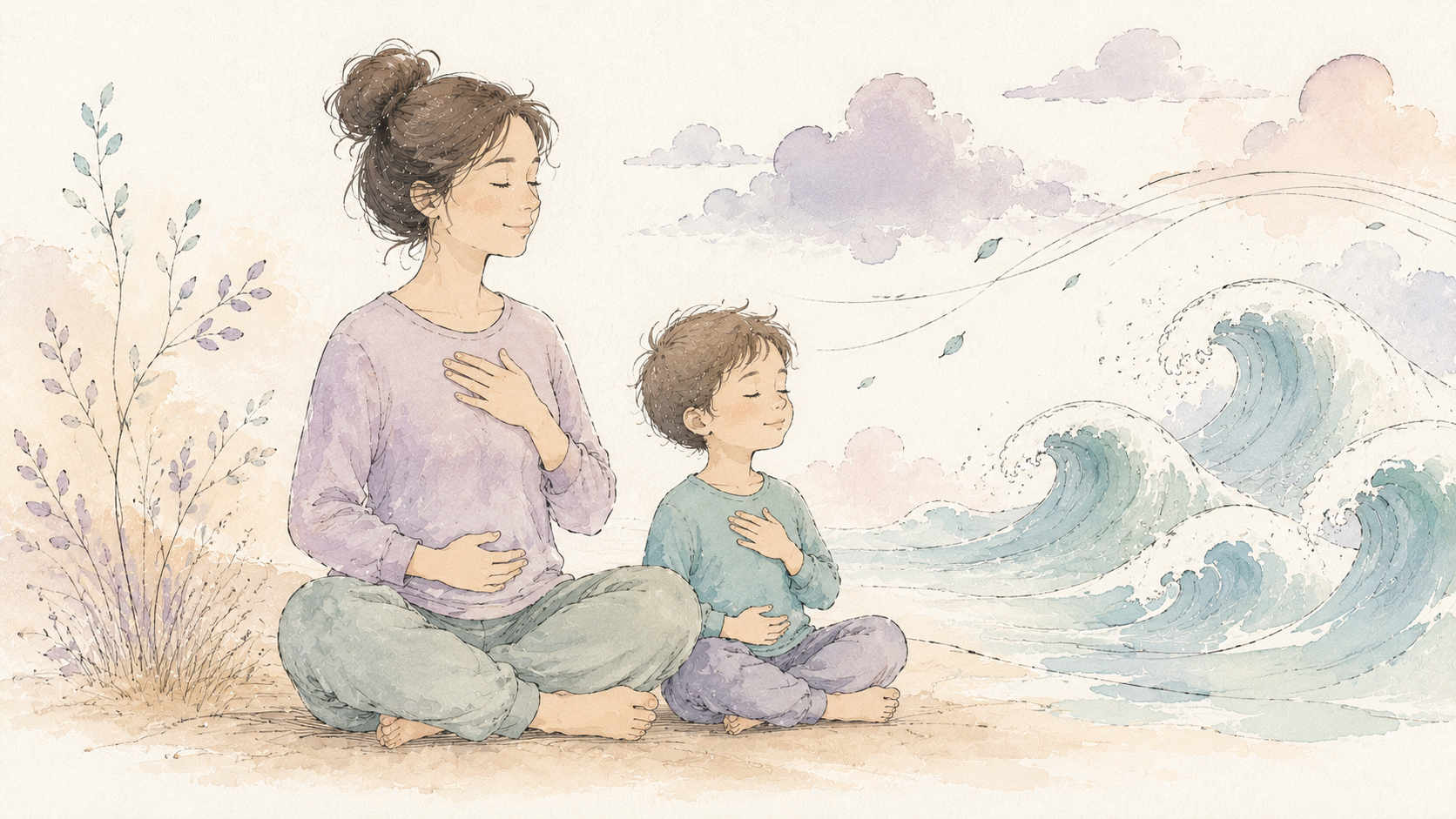
Regulation is learned through co-regulation first. When a young child is flooded, they cannot calm themselves, so they borrow a regulated nervous system from a trusted adult. Your steady voice, your slower breathing, your calm body literally help their body settle. Thousands of these borrowed moments, repeated over years, are how a child gradually internalizes the ability to do it on their own. You are the training wheels before they can balance alone.
Why you cannot rush it
The part of the brain that manages strong feelings is under construction throughout childhood and well into the teen years. That is why a toddler cannot do what a ten-year-old can, and why even big kids lose it sometimes. Expecting a child to regulate beyond their developmental stage sets everyone up for frustration. Patience is not just kind here, it is accurate.
How to teach emotional regulation
- Name feelings, often. Putting words to emotions, theirs and yours, helps the thinking brain get a handle on them. "You are disappointed." "I am feeling frustrated, so I am taking a breath."
- Model your own regulation. Your child is always watching how you handle stress, anger, and mistakes. How you regulate is the most powerful lesson in the house.
- Co-regulate in the moment. When your child is flooded, share your calm before you teach anything. Get close, soften your voice, and be the steadiness they cannot yet provide for themselves.
- Coach calming tools in calm times. Practice slow breathing, a glitter jar, a quiet corner, or a movement break when things are peaceful, so the tools are available when feelings are big.
- Validate first, then guide. "That was so frustrating" opens the door far better than "calm down." A child who feels understood can begin to settle.
- Repair after ruptures. When you lose your own cool, reconnect and name it. Repair teaches that relationships and feelings can both recover.
"You are the calm your child borrows until they grow their own. That is not a shortcut around the work. It is the work."
When a child struggles more than peers
All children melt down sometimes. But if your child's difficulty managing emotions is intense, frequent, far beyond same-age peers, or getting in the way of friendships, school, or family life, it is worth talking with a psychologist. Some children need extra support to build these skills, and earlier help makes a real difference. This is often true when you are working through frequent tantrums or noticing signs of anxiety.
The relationship is doing the teaching
Emotional regulation is caught more than it is taught. It grows in the soil of a warm, steady relationship, through countless moments of a child being upset and a parent staying connected. Every time you lend your calm, you are not just surviving the hard moment. You are wiring in the very skill you hope your child will carry for life.
Frequently asked questions
At what age can a child regulate their emotions?
It develops gradually across childhood and into the teen years. Young children rely heavily on co-regulation with you, and self-regulation strengthens slowly with practice.
How do I help my child calm down in the moment?
Share your calm first. Get close, lower your voice, name the feeling, and be the steadiness they cannot yet provide for themselves. Save teaching for after they have settled.
Is it bad to tell my child to calm down?
Telling a flooded child to calm down rarely works and can feel dismissive. Validating the feeling first, then co-regulating, helps far more.
Why does my child regulate at school but fall apart at home?
Many children hold it together all day and release their biggest feelings where they feel safest, which is with you. It is exhausting, but it is a sign of trust.
Enjoyed this? Explore more articles